Goalie Splits
This isn’t about Rylan Hartley, although “goalie splits” does bring him to mind.
It’s week 14. Probably the best time to start talking about all the stat work for goalies I did ahead of the season. Super punctual.
I did not know whether I wanted to cover the 2025-26 NLL season when fall 2025 came around. The draft piqued my interest, and those wheels started turning towards yes, so by the end of October, I was more or less on board. That gave me a month to update all the stats docs and my site for the new season, which sounds like enough time until you remember full-time job/pet/gym/books/general life stuff/etc., etc. The new thing I wanted to track was shots from lefties and righties, which doesn’t sound like a huge thing to track but essentially doubled my workload to accomplish.
I added more to that workload because I hate myself had the brilliant idea to take all of the data I had for shift types — goals, saves, shifts, and shots — and notate all of that for each individual goalie. Grind don’t stop; mental health is for the rich.
Typical goalie stats. Saves by shift type. Save percentage by type. GSAA by type. Want to get into the nitty gritty and look at just SOG% against for goalies? All that and more can be found here. It is a cornucopia of data putting players already under electron microscopes and dissecting their performances further. I’m sorry for the monster I created, but it’s super fun to peruse.
How to use it? I think it’s pretty intuitive, but I also built the damn thing and spend way too much time thinking about the NLL and stats. One of my knocks against my site (from myself) is it does a piss-poor job helping visualize data, making it clear how well teams or individuals do at X, Y, or Z. Maybe someone shouldn’t wait until a month before the season starts to whip up all this shit and should’ve spent the offseason learning Adobe.
Until that happens, it means we have to roll up our sleeves a bit and not just assume the best goalie at every shift type is Brett Dobson (although it is him nine times out of ten). Let’s take a look through all the information and use it to talk about three different National Lacrosse League starters and what the data tells us about their individual seasons.
I want to preface this with a key tenet of mine regarding this entire statistical nonsense operation I run: It probably does not tell us anything we don’t already know, but it does provide us with the numbers supporting what we ken from our eye tests.
That’s important to remember for our first examinee, one…
Matt Vinc
567:23 min. | 11.21 GAA | .763 Sv% | -12.86 GSAA | 47.27 SA/60
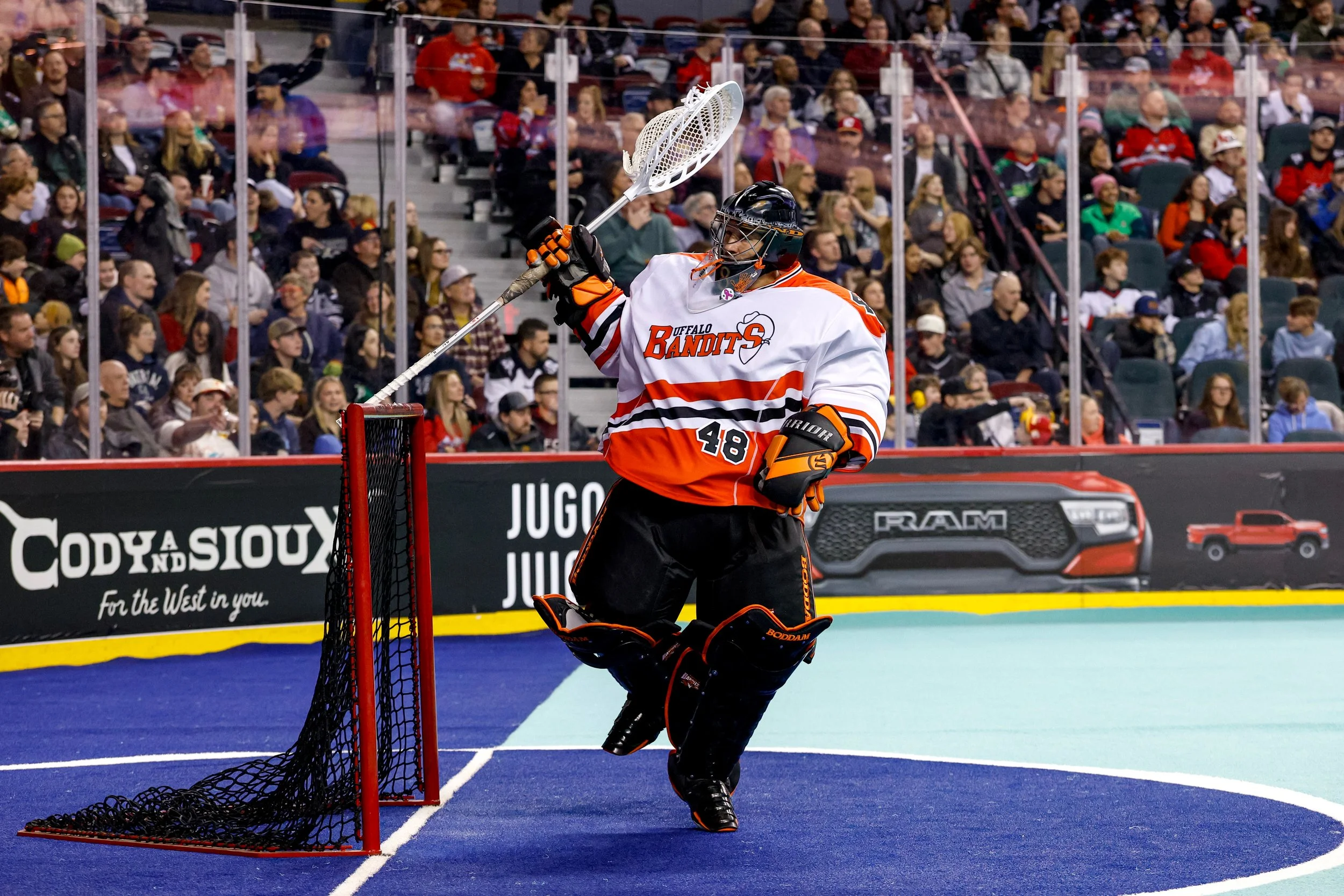
Photo Credit: Calgary Roughnecks
Insert Father Time caught up to—I’m so tired, can we not come up with better jokes about Vinc’s decline in 2025-26? Something involving wine? Vinc is playing as poorly as a merlot pairs with artichokes. There, free for any broadcaster to steal.
The Bandits offense lacking the depth it had and Josh Byrne not being his usual deadly self is overshadowing Vinc and the defense of late, but it doesn’t change the fact his age-41 season is shaping up to be the worst season of his storied career since his 2012 Knighthawks season (in which they won their first of three consecutive Champion’s Cups).
I quipped earlier in the season that maybe lefties were Vinc’s Achilles’ heel this season, and that moment of levity turned out to be prescient. Vinc has given up 106 goals this season, giving him the fifth-worst GAA in the league, and lefties have feasted, daggering 59 of those 106 goals past him. A split differential of 12 isn’t the worst in the NLL — sorry, Doug Jamieson with his 17 (65 lefty, 48 righty) and a guy we’ll talk about later who also has a split diff of 17 — but combined with his saves (160 lefty, 181 righty), we can see that the pressure’s relatively even across the board, but Vinc isn’t handling half of it as well as the other half.
This dives into the stat I like best for telling me how a goalie’s actually performing compared to his peers in a season, Goals Saved Above Average. GSAA compares goalies to their peers — which is a bit unfair in this season of the goalie and with Dobson obliterating records — and inherently appreciates how many shots a goalie faces. Say what you want about how old and slow Buffalo’s defense is, but their shot suppression skills are tops in the NLL; the only team that allows fewer shots against per 60 minutes is the Saskatchewan Rush.
Buffalo’s defense suppressing shots at an elite rate means that the opportunities Vinc faces are fewer than average, and if he’s letting lefties in transition and special teams — two facets where opponents have better odds of getting shots off — beat him more than righties, then it means Buffalo’s 4-6 and on the outside looking in at the playoffs.
But sometimes it doesn’t matter how well you play, your team is bad across the board and can’t match what you’re doing between the pipes, such as…
Nick Damude
492:17 min. | 11.94 GAA | .799 Sv% | 3.68 GSAA | 59.48 SA/60
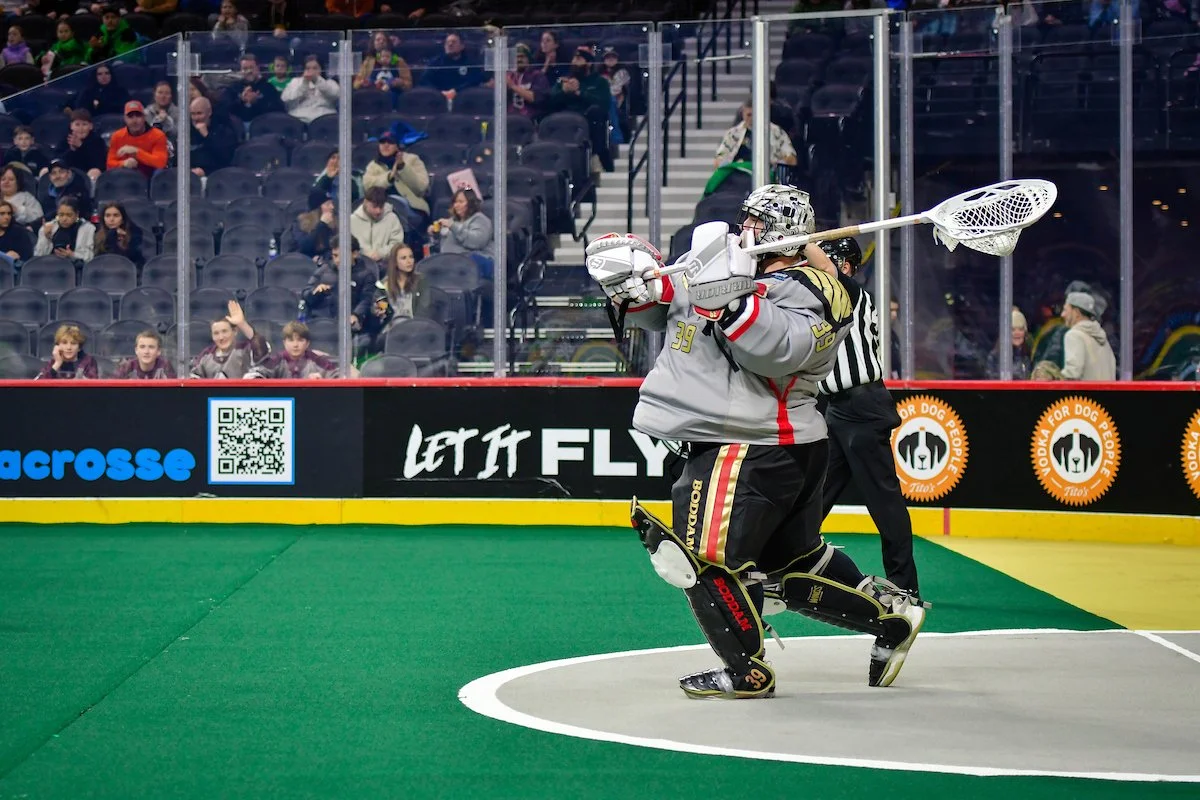
Photo Credit: Ryan Nix/Philadelphia Wings
It’s easy to point at Damude’s SA/60 numbers which are the tops in the NLL and have been every season he’s been on the Wings, but that undersells where the 27-year-old’s good and where he’s getting worked. There are three stats in particular that are interesting to note:
Damude is the best goalie in the NLL at stopping righties on even strength sets. His 9.17 GSAA in that particular facet is the highest in the NLL.
While he’s top 5 in GSAA for TruePP, he’s bottom 1 in GSAA for TrueFB at -9.03. Lefties score on half of their fast-break opportunities against him, and he stops 69.2% of righty attempts that are on target. It’s not that teams run a lot against the Wings; Damude averages 9.4 TrueFBSets per game. As a comparison, Warren Hill, who’s on the busiest reverse transition team in the NLL, averages 11.8 TrueFBSets against per game; Dobson’s at 12.8; Dillon Ward’s at 10.5. Similar to Vinc and the Bandits D, the opportunities in reverse transition aren’t overwhelming Damude, but he’s much better at stopping one dominant-handed opponent than the other.
Finally, Damude’s balanced as hell. Of the 98 goals against him, they’re split evenly between lefties and righties. Oddly enough, the TrueFB goals against are almost even, too — 13 lefty, 12 righty. Neither are the worst in the NLL and are indicative to how many more right-handed transition shots he’s faced (39) compared to left-handed ones (26).
It’s such a weird season for Damude, but that’s been his entire tenure with Philadelphia. He’s strongest at the most important shift type — 8.94 TrueES GSAA —, above average on the penalty kill, and has difficulty stopping certain players in transition.
At the end of the day, Damude is a top 6 NLL goaltender and a huge reason for the two wins the Wings have this season. He’s six, but that’s good enough to win you an NLL Cup if the defense in front of him is remotely average.
If they were better than average, however, then he’d be…
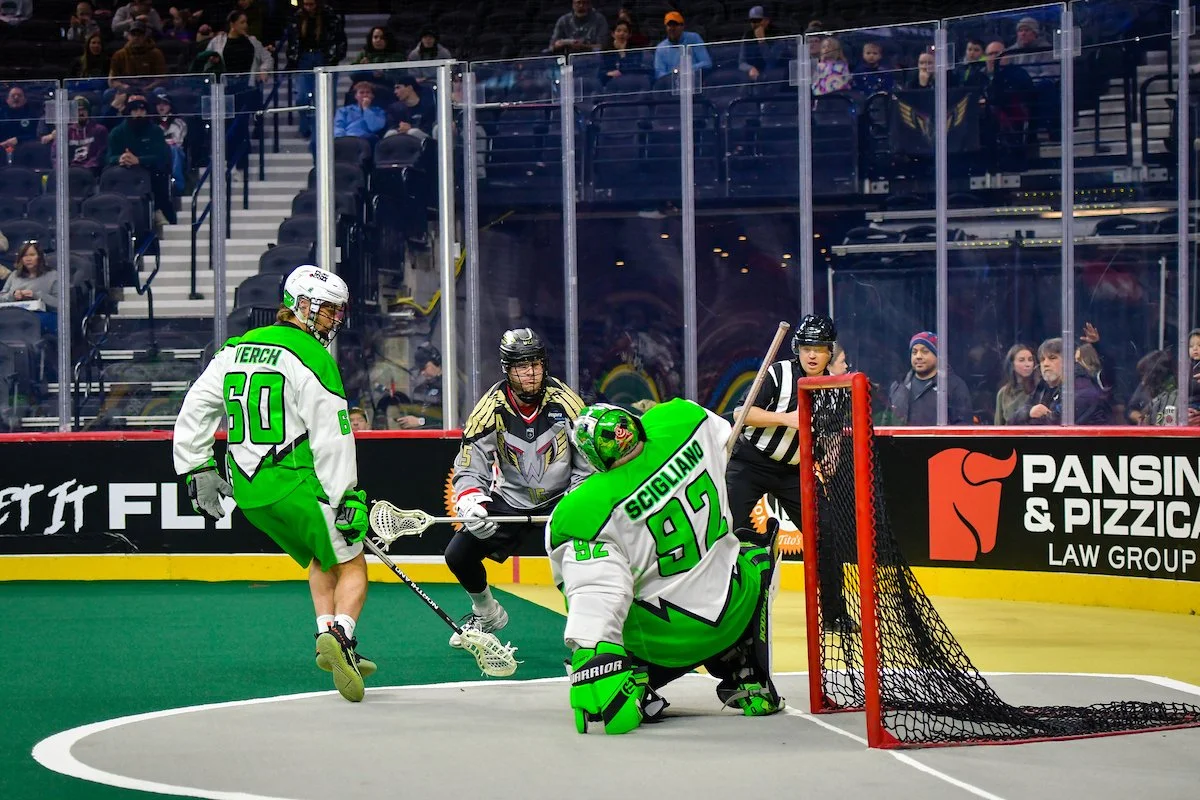
Photo Credit: Ryan Nix/Philadelphia Wings
Frank Scigliano
660:17 min. | 9.00 GAA | .804 Sv% | 6.23 GSAA | 45.89 SA/60
I’m going to start this with something that’s not really fair: Scigliano isn’t defending his Goaltender of the Year crown particularly well.
It’s not an upright statement. Easy counterargument off the hop is the Rush are 10-1 — he’s doing enough. There’s also the whole other NLL goalies are playing out of their minds right now, which means if you’re not in their stratosphere, then your numbers take a bit of a hit. Having a 6.23 GSAA at this point in the season is really respectable in a normal season!
But that 6.23 GSAA for the Rush netminder is courtesy of the 45 saves he made against Philly last weekend. Heading into the weekend, it was 1.80. Before that, it was -0.18. And through week 10, it was -0.83 and had been in the negatives for most of the season.
That 45.89 SA/60 is to blame. Scigliano faces the least amount of shots on target per 60 minutes out of every NLL netminder this season, and similar to Vinc, he’s not been as good at stopping those chances, particularly settled.
Where True numbers are concerned, Scigliano has a -5.45 ES GSAA, a 2.54 PP GSAA, a 6.22 FB GSAA, and a 2.02 SH GSAA. Lefties have his number settled, as his -5.78 L TrueES GSAA is the fourth worst in the NLL; every other True GSAA is positive, no matter which hand you’re looking at.
It’s an Achilles; heel, but considering where most NLL games are played, 5-on-5, it’s a glaring one. Considering how dominant he is in every other shift type, it’s the one weakness teams need to try and exploit moving forward. Hasn’t worked so far if that 10-1 record the Rush boast is any indication of things.