Seals Slide
Compared to a kiss from a rose on the grave/grey
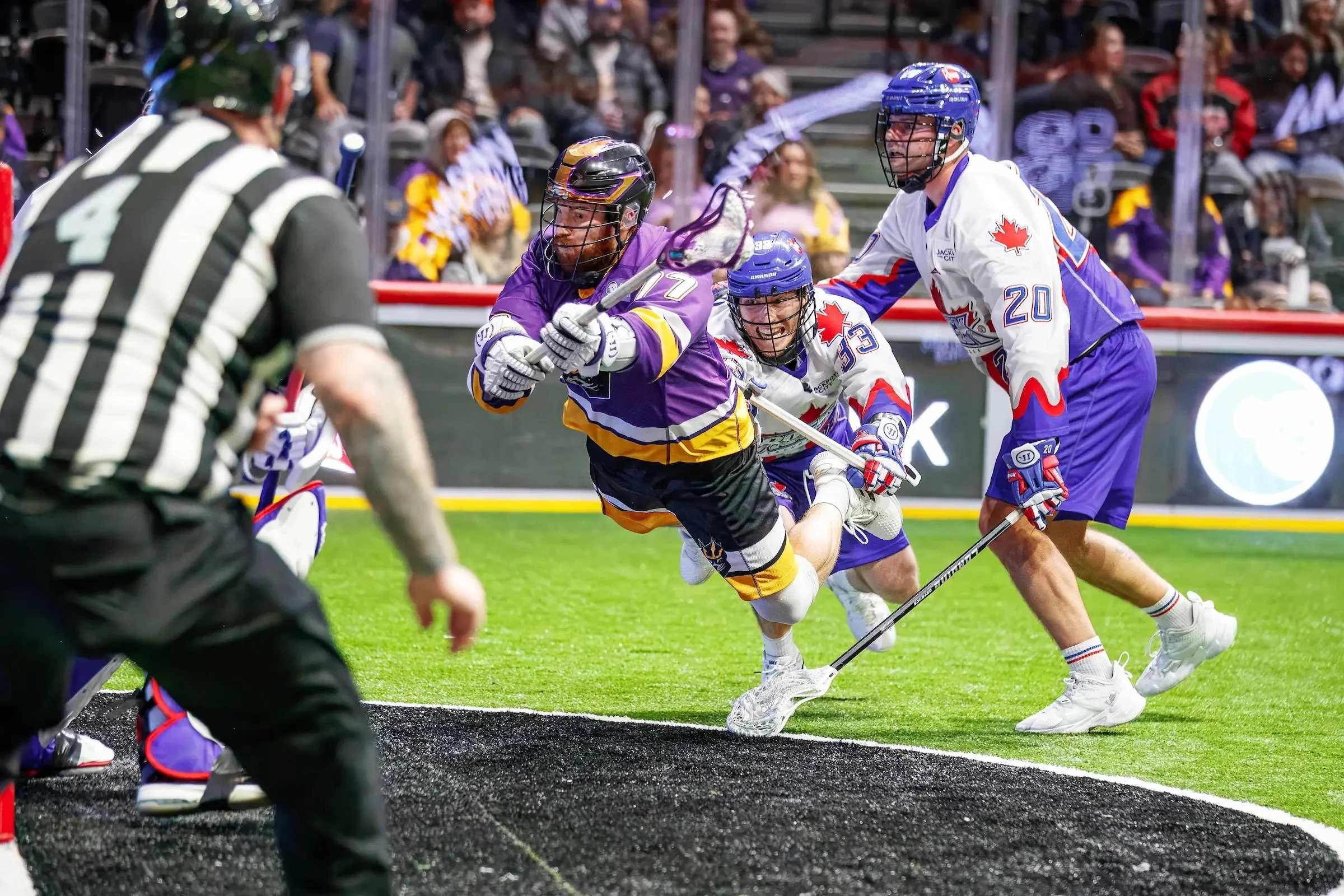
Photo Credit: Alexis Goeller/San Diego Seals
Musing about all 14 NLL teams earlier this week for content reasons, I had the thought flit through my skull: which of the five teams with a .500 win-loss record was the most confuddling, their uneven start perplexing.
That gives me a pool of the Ottawa Black Bears (4-4), San Diego Seals (3-3), Toronto Rock (3-3), Buffalo Bandits (3-3), and Las Vegas Desert Dogs (3-3) to look through. I can come up with reasons for why each team is where they are ahead of week 10 of the 2025-26 National Lacrosse League regular season, but I really wanted — working backwards from my desired answer — to write about the Seals. They’re probably not where they want to be a third of the way through their season, and there are reasons all across the floor that factor into their middling record. Out of those five teams, I find their early start the most fascinating.
But like I said, I can come up with reasons for why they are where they are — hell, my preseason prognostication looked pretty solid there for two months, and a lot of their issues were touched on in my no more small sample size piece from two weeks ago.
“I didn’t read that piece.” I know you didn’t, sweet summer child. And clicking embedded links is hard. Let me spoil you with the cliffnotes:
Injuries.
Offense is meh.
Settled defense took steps back.
Chris Origlieri’s having another rough start to a season.
Short article. Wrap up production, send the crew home, we’re done here.
Except we’re not. Recalling my preseason predictions made me remember I felt like the Seals were going to fall off for specific reasons, trends that had been building over the last year.
We’re used to the Seals being one of the best teams in the NLL, swaggering with the bravado born from having Joe Tsai owning your team and wanting to see it succeed. Marquee free agents, exciting American talent, a punishing offense and underrated defense.
That hasn’t been the case over the last two seasons. Here are the numbers showing the slide.
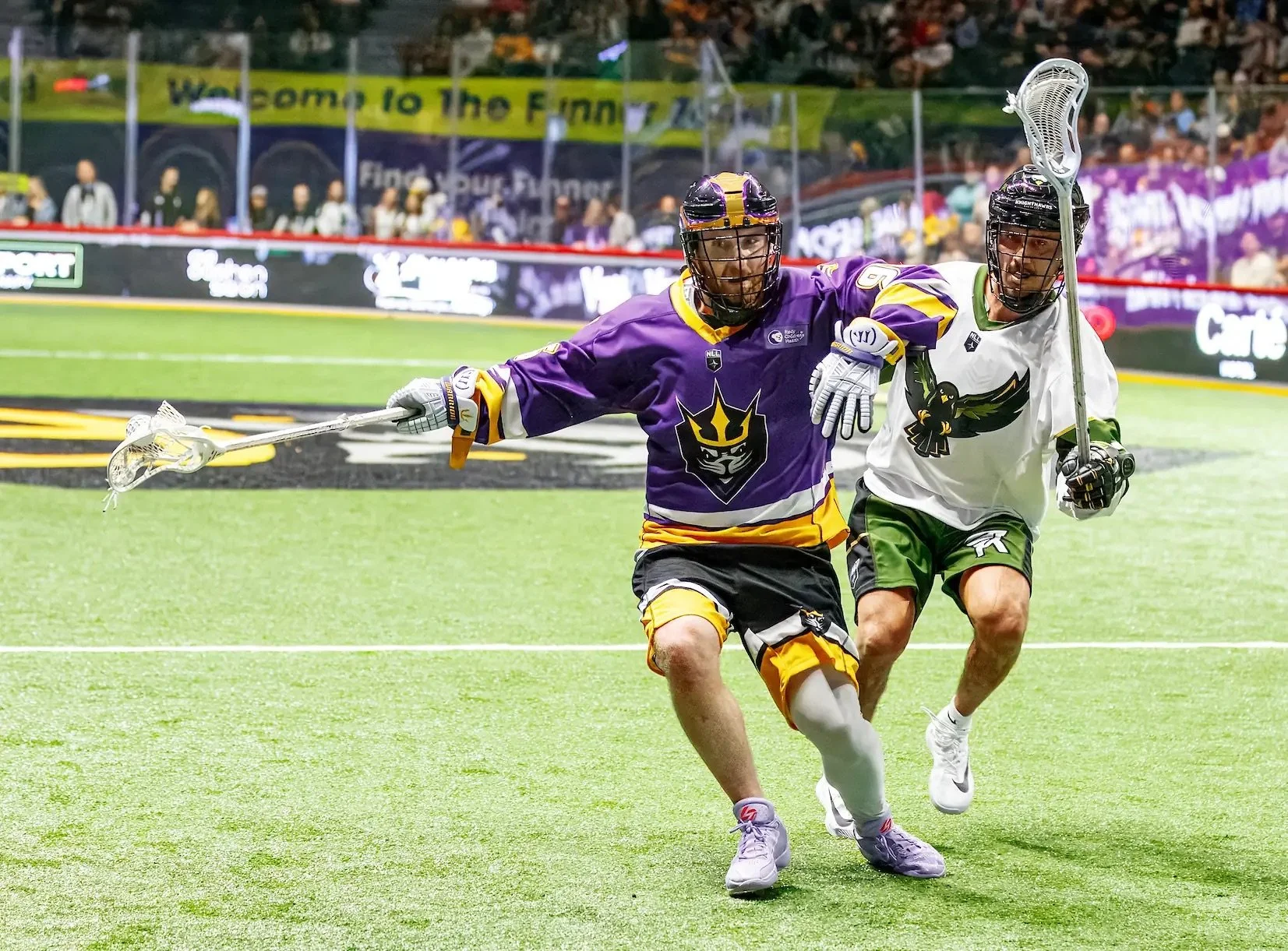
Photo Credit: Alexis Goeller/San Diego Seals
Let’s start with the offense but also get this out of the way — Austin Staats being out of the sport the last two seasons is why the Seals offense has regressed is not the counterargument you think it is.
Offensive TrueE%
The Seals true offensive strength in the last season with Staats in the lineup was their power play, which averaged the most PPG/GAME at 2.7 and had the third-most efficient man-advantage. But their settled offense and transition game were both 12th in the NLL in 2023-24. On those shift types, they only lost (didn’t record a shot for whatever reason) 18.4% and 15.4%, respectively, of those shifts, both in the top five for lowest shifts lost in those categories. This meant they shot a lot — and they definitely shot a lot, averaging 58.1 SOG/GAME, just a tenth of a SOG behind the league-leading Knighthawks — but weren’t beating the opposing defense.
The settled and run games both actually got better in 2024-25, 5th and 6th best in the NLL, respectively. While the power play stepped back, it was still sixth best. Rob Hellyer, Wes Berg, Ben McIntosh, and Ryan Benesch did plenty in Staats’ absence, as the Zach Currier front door experiment took time to congeal, the left side becoming a hodgepodge of throwing everything at the wall to see what sticks throughout the season.
But the lost-percentage trend continued. The Seals in 2024-25 only lost a fifth of their settled sets, third lowest, and 7.6% of their man-up shifts, best in the league. Considering they remained top three in SOG/GAME, it meant plenty of shots made it on goal but not across the line.
The even strength game has course corrected this season, returning to nearly the same efficiency percentage as 2023-24. The power play’s slide continued, as it’s now 11th in the NLL in efficiency. The transition game’s plateaued a bit, half a percentage point behind last season’s production and 7th best this season.
They’re tops (lowest) in all lost percentage categories, though, and second in SOG/GAME. Different year, same Seals.
San Diego’s shot selection isn’t great and hasn’t been harkening back to their heyday. It’s still good (re: average), but this is the NLL. Average don’t cut it.
Shorthand offense honestly doesn’t matter to me too much. The goal’s different; kill as much clock as possible. A lost possession means a full thirty-second clock could’ve been wasted, which kills a penalty, which is beneficial. Scoring a shorthanded goal is a bonus, but it shouldn’t be a reliable strategy for a team. Better to never go on the penalty kill, but that’s not realistic.
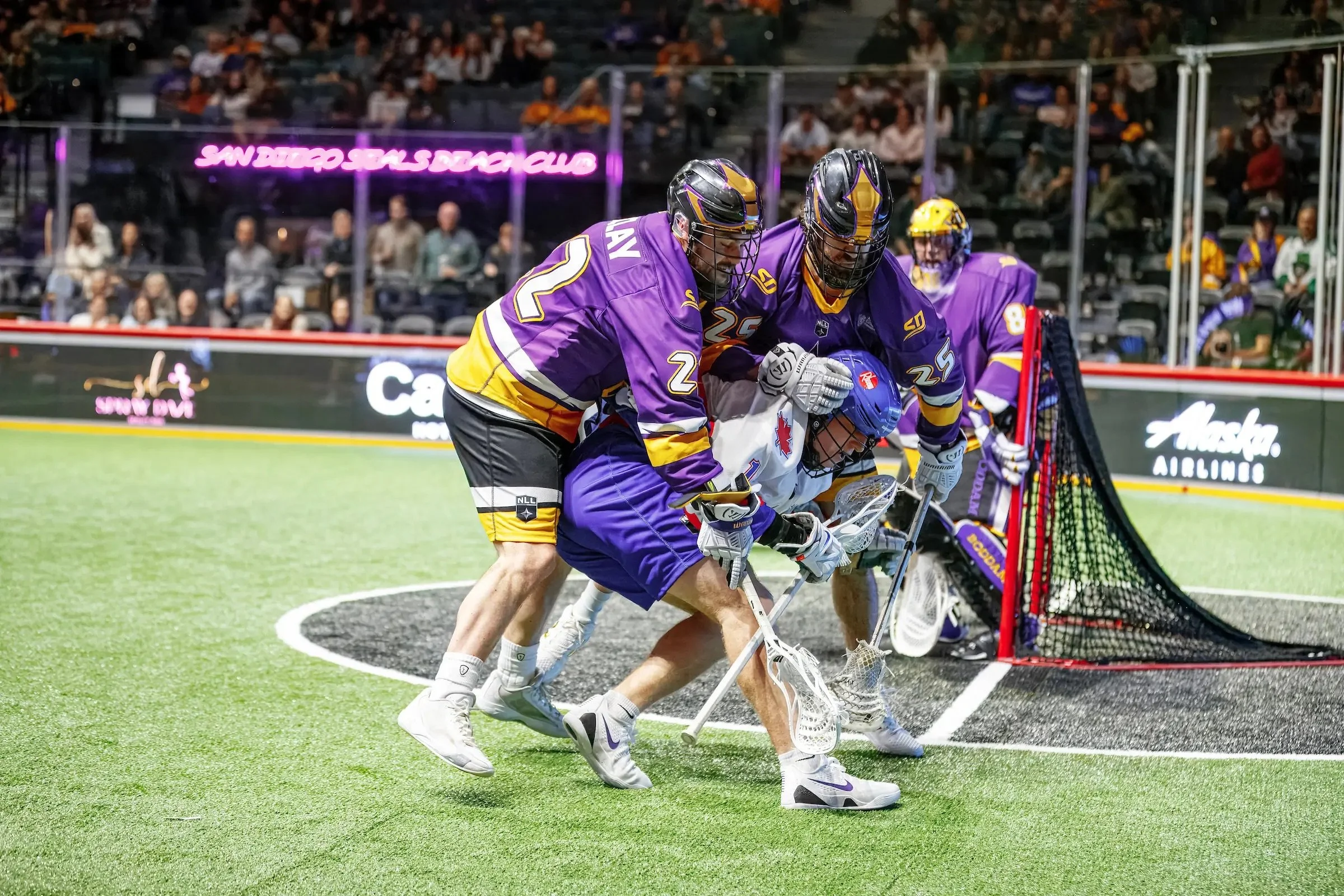
Photo Credit: Alexis Goeller/San Diego Seals
We’re going to jump to the defense, which is honestly the whole reason for this article.
Preseason, I was concerned that Cam Holding and Jesse Gamble’s retirements, along with the midseason trade last season of defender Drew Belgrave to Las Vegas, would weaken the Seals defense (sidenote, apologies, but that trade was for forward Dylan Watson, who was a 2 PTS/GAME player before that trade and has bumped that up to a whopping 3 PTS/GAME in 11 games in purple, and a second-round pick in the 2027 Entry Draft. Belgrave is now Vegas’s captain and arguably best defender. Lopsided trade before the draft pick even factors into the equation). That’s a lot of depth and experience gone, and if Origlieri wasn’t on top of his game again, then it was going to be a rough season.
Efficiency percentages this season seem to validate my thoughts.
Defensive TrueE%
The settled defense continued to let more goals get scored; their 15.2 TrueESE% this season is last in the NLL. Opponents have found more success in transition against the Seals, another trend that’s continued to slide the wrong way. The penalty kill being half a percentage point better than last season seems all well and good until you remember this is the Season of the Goalie — 17.2 TruePKE% is 11th in the NLL.
But that penalty kill is the Seals’ best defensive weapon at second blush. It forces opponents to lose 17.6% of their man-advantage shifts, tied for third best in the league. San Diego’s settled lost percentages (20.4%, 9th) and transition (17.2%, 8th) have taken notable steps back from when they were 1st and 3rd in 2024-25, but maybe 2024-25 was the blip. From an efficiency standpoint, the Seals defense was better in 2023-24, but their LP% settled was the worst in the NLL, and their other True shifts were average.
Complicating things a bit more at third blush is the team’s SOG/GAME. The Seals defense allowed 48.3 SOG/GAME against in 2023-24 (tied for the best (lowest) with Vancouver), 49.8 in 2024-25 (3rd), and 48.8 this season (tied for 4th with Toronto).
So, the Seals defense remains great at shot suppression despite whittling away at their depth, suggesting the defensive systems they’ve in place are consistent and work (Cam Woods deserves some flowers for his work as the team’s Defensive Coordinator all three seasons). But if the systems are the same, what could be the reason for the efficiencies becoming so po—
It’s Origlieri. You know it’s Origlieri. I know it’s Origlieri.
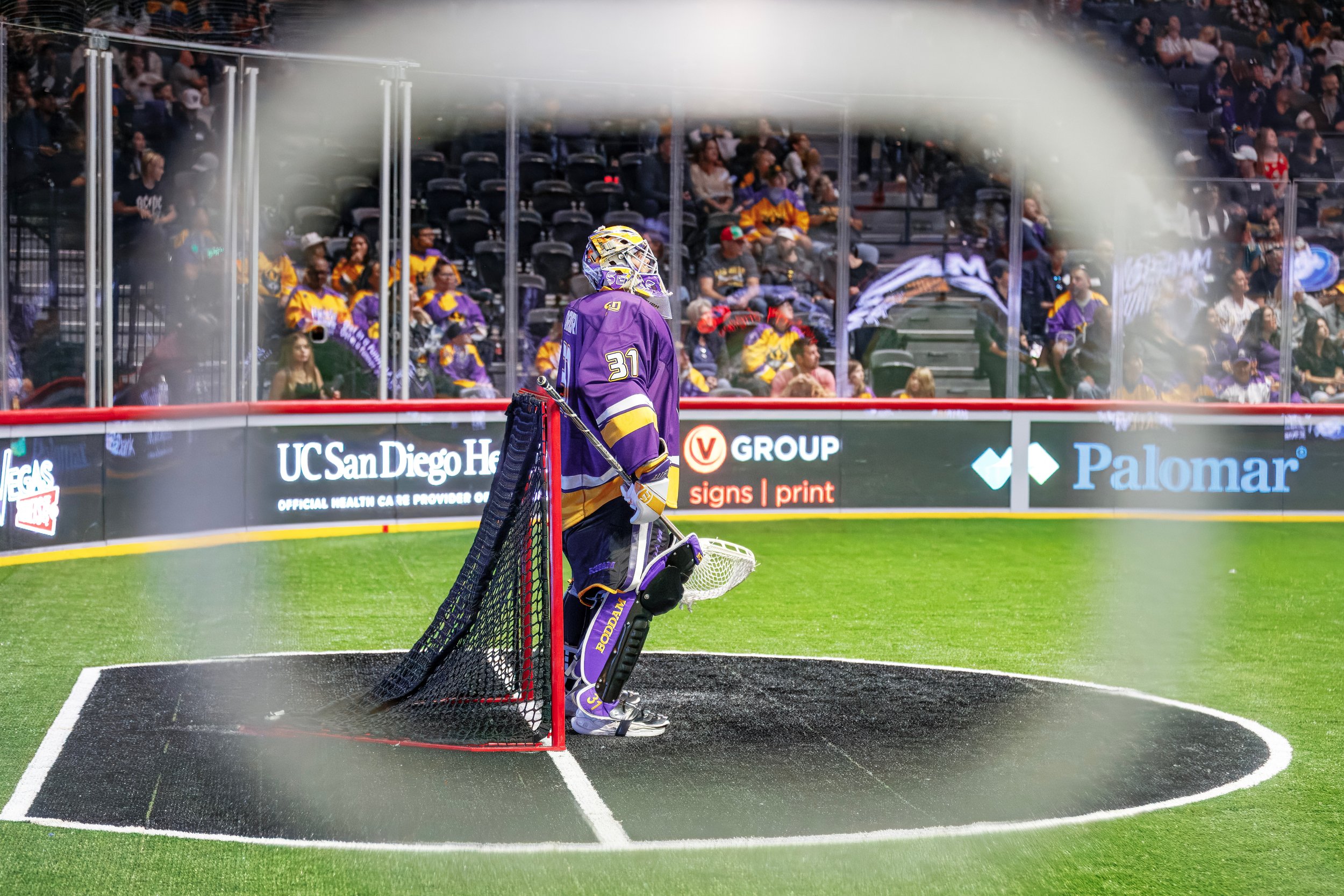
Photo Credit: Alexis Goeller/San Diego Seals
| Season | GAA | Sv% | GSAA | SA/60 |
|---|---|---|---|---|
| 2023-24 | 9.79 | .795 | 10.55 | 48.6 | 2024-25 | 11.47 | .770 | -8.85 | 50.0 | 2025-26 | 11.62 | .771 | -5.04 | 50.8 |